Screen-Free Morning Habits: Focused, Calm Tech-Free Start

Morning Habits Without Screens: A Tech-Free Routine for Focus, Clarity, and a Calmer Start
A screen-free morning doesn’t require a perfect schedule or a total digital detox. It’s a set of small, repeatable choices that protect attention before notifications, news, and feeds take over. A few minutes of quiet structure can make mornings feel clearer, steadier, and easier to follow through on—especially when the rest of the day gets noisy.
Why a Screen-Free Morning Changes the Rest of the Day
Phones are designed for rapid switching: messages, headlines, and social feeds all compete for the same limited attention. Starting the day in that mode can leave your mind scattered before you’ve even chosen what matters.
- Less attention fragmentation: avoiding rapid context switching helps you stay in one mental “lane” longer, which makes it easier to focus once work begins.
- A calmer nervous system: skipping immediate information overload can reduce the sense of urgency that builds when you wake up to alerts and bad news. The American Psychological Association notes that stress affects the body in real, physical ways—mornings are a smart place to lower the baseline.
- A buffer for your priorities: choosing your first actions before you consume other people’s agendas helps you start the day on purpose.
- Stronger internal cues: without constant input, it’s easier to notice hunger, energy, mood, and what you actually need—water, movement, or a slower start.
The 4-Part Framework: Body, Space, Mind, Plan
Instead of building a complicated routine you won’t repeat, use four simple building blocks. Think of them like Lego pieces: small, dependable, and easy to rearrange.
1) Body
Start with hydration, light movement, and a few slow breaths. This signals “wake up” without a stimulation spike.
2) Space
Do a tiny reset—open curtains, make the bed, clear one surface. Visual clutter can quietly drain attention before the day even begins.
3) Mind
Choose a quiet focus habit: journaling, reading a page, prayer, or meditation. The goal isn’t self-improvement; it’s stabilizing attention before the world grabs it.
4) Plan
Pick 1–3 priorities and define the first tiny step for each. “Write report” becomes “open document and add headings.” This prevents drifting once screens come back.
Tech-Free Morning Routine Options (choose one and repeat for 7 days)
| Routine length | Body | Mind | Plan | Best for |
|---|---|---|---|---|
| 10 minutes | Water + 2-minute stretch | 1 minute breathing + 2 lines of journaling | Pick 1 priority + first step | Busy mornings, parents, commuters |
| 20 minutes | Water + 5-minute walk or mobility | 5 minutes reading or reflection | Top 3 tasks + time block the first | Work-from-home, students |
| 35 minutes | Hydrate + movement + sunlight | 10 minutes journaling/meditation | Weekly goal check + define “done” for today | Deep work days, creators, entrepreneurs |
A Practical Screen-Free Rule Set That Still Fits Real Life
Rules work best when they’re automatic. Choose one trigger and stick to it, rather than relying on willpower.
- Pick a “no screens until after” trigger: after breakfast, after a short walk, or after planning. One clear rule beats a vague goal.
- Use physical substitutes: paper notebook, printed checklist, a book by the kettle, or a simple alarm clock.
- Create a safe exception list: childcare messages, urgent family calls, time-sensitive travel updates. Everything else can wait.
- Make the phone harder to reach: charge outside the bedroom, keep it in a drawer, or place it facedown across the room.
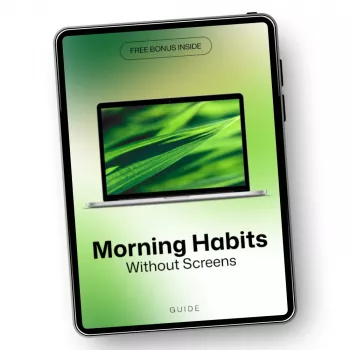
If you want a ready-made structure you can print and follow without thinking, Morning Habits Without Screens – Tech-Free Morning Routine Guide for Focus, Clarity & Productivity (Digital Download) is designed around short, repeatable steps and checkboxes.
Habit Building That Sticks: Start Small and Remove Friction
Consistency beats intensity. A routine you repeat at 60% is more powerful than a “perfect” routine you quit after three days.
Sleep quality affects morning follow-through. For practical habits that support better rest (and easier wake-ups), the National Sleep Foundation’s healthy sleep tips are a helpful reference.
Common Morning Pitfalls (and Simple Fixes)
Printable Support: A Ready-to-Follow Routine You Can Start Tomorrow
For a streamlined, tech-free layout you can reuse, Morning Habits Without Screens – Tech-Free Morning Routine Guide (Digital Download) is built for quick starts and repeatability.
When Screens Are Unavoidable: Protect Focus and Your Eyes
- Keep the first 5–10 minutes screen-free: water, posture reset, and one minute of breathing can reduce the “mental scatter” that comes from immediate switching.
- Use environmental cues: brighter ambient light, a neutral workspace, and a planned first task reduce the odds of wandering online.
- Add micro-breaks: if screens start early, take brief breaks and change focus distance to reduce discomfort. The American Academy of Ophthalmology outlines practical ways to reduce digital eye strain.
For a deeper, step-by-step approach, Preventing and Relieving Screen-Induced Eye Strain – Practical eBook Guide (Digital Download) covers daily habits, workspace tweaks, and relief strategies that fit real workdays.
FAQ
How long should a screen-free morning be to make a difference?
Even 10 minutes can help if you repeat it for seven days. Start with one simple rule, such as no phone until after water and a 60-second plan, then expand to 20 or 35 minutes as it becomes automatic.
What if the phone is also the alarm clock?
Use an analog alarm if possible, or place your phone across the room with Do Not Disturb enabled so you’re not tempted to open apps. Having a paper plan ready the night before helps ensure your first action isn’t “check notifications.”
Can a tech-free morning still work with kids or a tight schedule?
Yes—use a 5–10 minute version anchored to something you already do, like coffee or brushing teeth. Focus on one calming habit (water, breathing, or a short stretch) plus choosing one priority for the morning.













Leave a comment