Stress-Free Group Trip Planning: Roles, Budget, Itinerary

Group Travel Can Be Fun (If You Build the Right System)
Group trips can be unforgettable for all the right reasons—or exhausting for all the wrong ones. A stress-free plan is less about controlling every detail and more about setting clear expectations, choosing simple systems, and giving everyone a fair way to participate. The goal is to reduce “decision noise” so the trip feels easy long before anyone packs a bag.
Below is a calm, repeatable process you can use for friends, family, couples traveling together, or celebration weekends. Keep it simple, document decisions once, and let the plan do the heavy lifting.
Start with alignment: the non-negotiables and the nice-to-haves
Most group-trip tension comes from mismatched expectations. Fix that early by agreeing on the basics before chasing flight deals or scrolling rentals.
- Choose the trip “type” first. Is this a relaxation reset, an adventure sprint, a food-focused weekend, or a celebration? Naming the vibe prevents silent disappointment later.
- Set 3–5 non-negotiables. A budget range, a date window, accessibility needs, and preferred lodging style (hotel vs. rental) are usually enough.
- Call out deal-breakers now. Nightlife vs. quiet, early risers vs. late sleepers, “every minute planned” vs. slow pace—none are wrong, but they are different.
- Pick a decision rule. Majority vote works for most groups; a delegated captain works for small groups; “agree-and-commit” works when time is tight and debate is endless.
If you do nothing else, do this: write down the non-negotiables in one place and treat them as the trip’s guardrails.
Pick a planning structure that prevents decision fatigue
Group planning gets stressful when everyone is responsible for everything. The fix is “light roles” and “limited options.”
Assign lightweight roles
- Coordinator: keeps the timeline moving and posts deadlines.
- Budget lead: tracks shared costs and due dates.
- Logistics lead: proposes transportation options and arrival flow.
- Activities lead: builds shortlists (not a 40-link dump).
Limit choices to 2–3 options
Instead of “Where should we go?” try “Option A, B, or C—vote by Thursday.” Fewer options creates faster decisions and fewer bruised feelings.
Use one source of truth
A shared document or trip board should hold: booking links, confirmations, addresses, house rules, and payment notes. Don’t make people hunt through a chat for critical details.
Set planning deadlines
Deadlines protect the group from endless revisions. Once a deadline passes, treat the decision as locked unless it affects safety, major cost, or availability.
| When | Decisions to finalize | Output to share |
|---|---|---|
| 8–12 weeks out | Dates window, destination, budget range | Poll results + confirmed dates + budget cap |
| 6–8 weeks out | Lodging, transport approach, deposit plan | Booking links + payment deadlines + room plan |
| 3–5 weeks out | Must-do activities, meal strategy, local transport | Short itinerary + reservation list + transit notes |
| 7–10 days out | Final headcount, check-in plan, packing reminders | One-page trip brief + emergency contacts |
Budget without awkwardness: one number, clear boundaries
Money gets weird when it’s vague. Make it specific early and you’ll avoid last-minute sticker shock.
- Set a per-person target total. Not just lodging—include transport, food, shared rides, and at least one paid activity.
- Define “shared” vs. “personal.” Groceries, rideshares, and tickets might be shared; souvenirs and solo coffee runs are personal.
- Choose one payment method. Use a split-payment app, a shared card with clear rules, or one payer with scheduled reimbursements.
- Add a buffer (10–15%). Prices change, bags get checked, plans shift. A buffer keeps the mood steady.
If you’re collecting deposits or setting recurring charges, keep the terms clear and visible so no one feels surprised later. For consumer-friendly guidance on recurring billing practices, the Federal Trade Commission’s overview is a helpful reference point.
Lock in lodging with fewer headaches
Lodging is where group dynamics show up fast—noise, privacy, bathrooms, and who sleeps where. Solve it on paper before you book.
- Pick the right setup. Hotels reduce logistics; rentals add shared space; mixed lodging can serve different budgets and sleep needs.
- Confirm sleeping expectations. Who needs their own bed? Who can share? Any noise sensitivity? Early shifts?
- Write down house rules. Quiet hours, guests, shared spaces, and basic cleaning expectations prevent resentment.
- Collect deposits by a firm date. If someone misses it, proceed without them. This protects everyone else’s price and availability.
Create an itinerary that feels flexible, not rigid
The best group itineraries feel like a safety net—not a leash.
If you’re traveling internationally, it’s smart to check official guidance ahead of time, including destination-specific advisories from the U.S. Department of State and health recommendations from CDC Travelers’ Health.
Communication rules that keep the group calm
Make group travel easier with a ready-made planning system
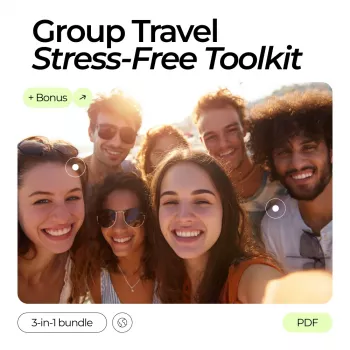
- The Stress-Free Group Travel Toolkit – How to Plan a Group Trip Without Stress (digital system designed to organize decisions, boundaries, and logistics)
- Preventing and Relieving Screen-Induced Eye Strain – Practical eBook Guide (useful when planning means lots of screen time, spreadsheets, and confirmations)
Departure-week checklist: the final 30 minutes that save the trip
FAQ
How do you plan a group trip without stress?
Align on budget, dates, and trip style first, then limit choices to 2–3 options per decision. Assign simple roles, set deadlines, and keep a single shared trip brief so logistics and expectations stay clear.
What is the best way to collect money for a group trip?
Collect deposits early with clear due dates and use one consistent method for shared expenses. Clarify what’s shared versus personal spending so reimbursements don’t turn into debates.
How do you handle different travel styles in one group?
Use a “spine + options” itinerary with one shared anchor per day plus optional activities. Split into parallel tracks when needed and reunite for key meals or highlights so no one feels stuck or excluded.














Leave a comment