Wall-Mounted Ceramic Sink + Stainless Stand: Modern
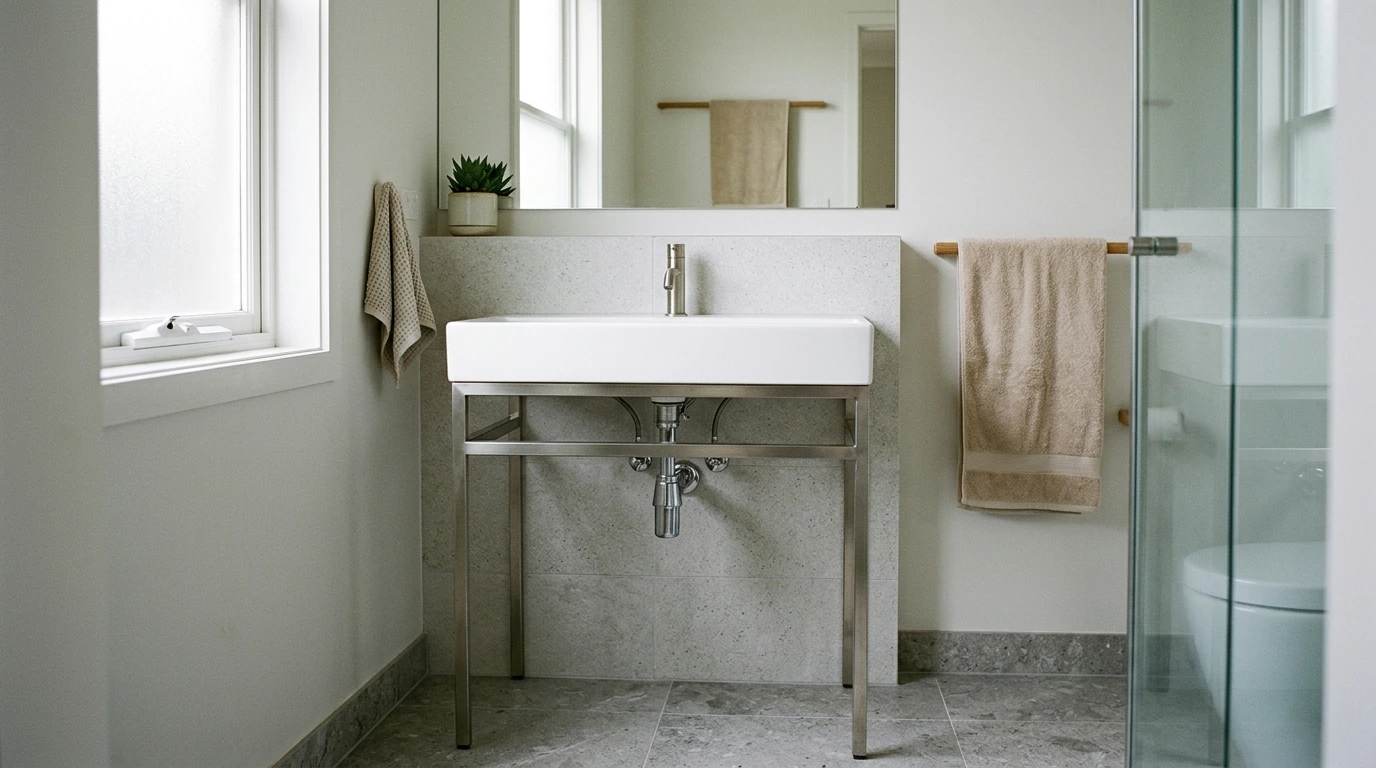
Wall-Mounted Ceramic Sink with Stainless Steel Stand: A Clean, Open-Look Upgrade for Modern Baths
A wall-mounted sink paired with a stainless steel stand is a smart way to keep a bathroom feeling open while still adding structure and support where it matters. This setup suits guest baths, powder rooms, and primary bathrooms that lean modern, minimal, or easy-to-clean—especially when a floating look and durable materials are top priorities.
Why this sink-and-stand combination works so well
- Keeps the floor visually lighter than a full vanity, helping small bathrooms feel less crowded.
- Blends a classic ceramic basin surface with a stainless steel support frame for a crisp, modern profile.
- Creates easier access for sweeping and mopping compared with bulky cabinetry.
- Supports a practical daily routine: quick wipe-downs, fewer corners for buildup, and a neat silhouette.
- Fits design directions from industrial to contemporary, depending on faucet and mirror choices.
Where it’s a great fit in the home
- Powder rooms: a polished centerpiece that doesn’t overwhelm tight square footage.
- Guest baths: durable materials that hold up to frequent use without demanding constant upkeep.
- Renovations that remove a vanity: opens sightlines and reduces visual weight along one wall.
- Bathrooms that need a cleaner look: ideal when storage is handled elsewhere (tall cabinet, shelves, or a nearby linen closet).
- Households that prioritize hygiene: ceramic and stainless steel surfaces are straightforward to sanitize.
Materials that support an everyday routine
- Ceramic basin benefits: smooth, non-porous feel that typically wipes clean with gentle cleaners and soft cloths.
- Stainless steel stand benefits: designed for moisture-prone spaces and well-suited to bathrooms where humidity and splashes are expected.
- A balanced pairing: ceramic brings a bright, bathroom-ready finish; stainless steel brings a structured, architectural base.
- Long-term cleanliness: fewer porous surfaces compared with some wood-based vanities, which can demand more careful moisture management.
- Finish coordination tip: stainless steel pairs naturally with chrome, brushed nickel, or stainless-look faucets for a cohesive set.
If you’re also thinking about water savings while upgrading fixtures, the EPA’s WaterSense guidance is a helpful reference for bathroom fixture efficiency.
Installation planning: what to confirm before ordering
- Wall type and reinforcement: wall-mounted fixtures generally need proper blocking or mounting support—confirm the wall can carry the load.
- Plumbing alignment: verify where supply lines and the drain exit the wall/floor so the installation looks clean and avoids awkward offsets.
- Faucet compatibility: decide whether the faucet will be wall-mounted or deck-mounted based on the sink design and plumbing location.
- Drainage details: plan for a P-trap and shut-off valves that align neatly (or consider decorative covers if your style calls for it).
- Height and spacing: select a mounting height that’s comfortable for daily use and leaves room for mirror placement and backsplash choices.
- Professional support: if relocating plumbing or reinforcing walls, scheduling a licensed plumber/contractor can prevent surprises.
For accessibility-related spacing and approach considerations, you can review the 2010 ADA Standards (Lavatories and Sinks) as a baseline reference when planning clearances.
Quick planning checklist (save time before checkout)
Use this checklist to confirm layout basics and avoid last-minute trips for parts.
Wall-Mounted Sink + Stand Planning Checklist
| What to confirm | Why it matters | What to note down |
|---|---|---|
| Wall construction and support | Ensures safe mounting and stable daily use | Stud spacing, backing/blocking needs, installer notes |
| Drain location | Prevents misalignment and visible plumbing gaps | Centerline position and height from finished floor |
| Supply line locations | Helps choose faucet style and clean routing | Hot/cold positions, shut-off valve placement |
| Faucet type | Determines rough-in requirements | Wall-mount vs deck-mount, reach, finish |
| Clearances | Improves comfort and code compliance | Mirror height, side clearance, door swing conflicts |
| Accessories | Completes the setup on install day | Pop-up drain, trap, escutcheons, sealant |
Styling ideas: how to make the look intentional
- Mirror choice: a simple rectangle mirror sharpens the modern look; a rounded mirror softens the stainless lines.
- Lighting: a pair of sconces adds symmetry and makes the area feel designed, even without a vanity.
- Backsplash approach: a short backsplash strip protects the wall; full-height tile creates a bold, boutique feel.
- Storage pairing: consider a slim wall cabinet, open shelving, or a nearby tall tower so the sink area stays uncluttered.
- Hardware coordination: match the stand’s stainless tone with towel bars or hooks to tie the room together.
Care habits that keep ceramic and stainless looking fresh
For a practical, bathroom-friendly approach to everyday cleaning steps, the CDC’s Clean and Disinfect guidance is a solid resource to keep on hand.
What to pair with it for a complete setup
In-stock picks from our team
- Wall-Mounted Ceramic Sink with Stainless Steel Stand ($1184.65)
- Everyday Pet Safety Kit for a Fully Pet-Proof Home – 4-in-1 Bundle of Guides, eBook, and Checklist ($390.99)
FAQ
Does a wall-mounted sink with a stand still need wall reinforcement?
Yes. Wall-mounted sinks typically need proper blocking or mounting support in the wall; the stand can add stability, but it doesn’t replace correct anchoring. If you’re unsure what’s behind the wall, having a qualified installer confirm support is the safest path.
What faucet style works best with a wall-mounted ceramic sink and stainless stand?
Both wall-mounted and deck-mounted faucets can work, as long as your plumbing rough-in and sink configuration match the faucet type. Prioritize proper spout reach so water lands cleanly in the basin without splashing, and choose a finish that coordinates with stainless.
How do you keep stainless and ceramic looking clean in a bathroom?
Use mild cleaners with a soft cloth, skip harsh abrasives, and dry stainless surfaces when possible to reduce water spots. Keeping the room ventilated and fixing small drips early also helps prevent mineral buildup and keeps finishes looking crisp.















Leave a comment