Stay Active Anywhere: A No-Gym Routine for Busy Days
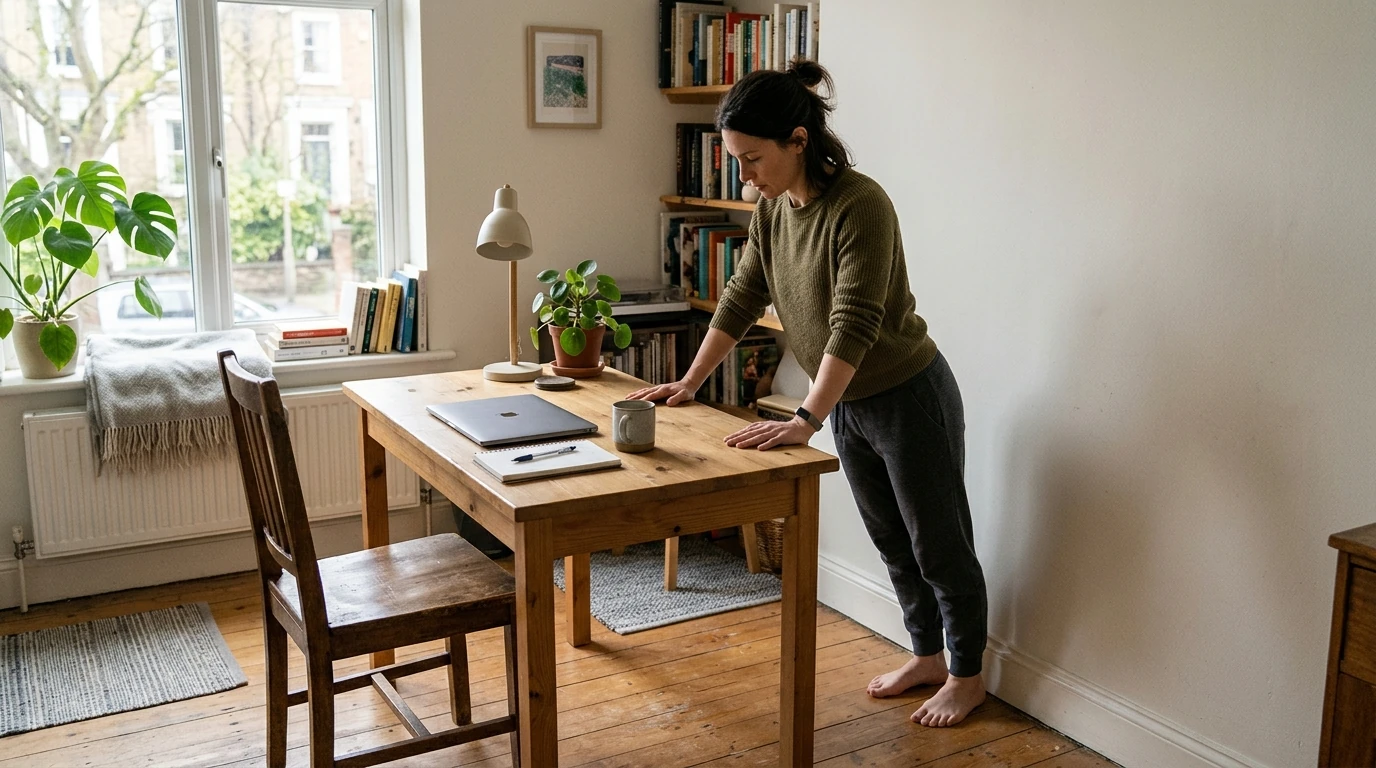
Waiting for a free hour to work out can mean waiting all week. Ten minutes after lunch, though, might already be available. A no-gym routine starts with openings like that: time you can use at home, outdoors, at work, or while traveling. Walking, stairs, gentle stretching, and bodyweight movements can all be part of an active day. The goal is to make movement convenient enough that you can return to it.
Build around your real schedule
Look at a typical day and choose two or three reliable openings. You might walk after lunch, move between tasks, or take a short break when the workday ends. Choose times that fit your life rather than planning around a free hour that rarely appears.
Give each opening a simple purpose. A lunch break could be for walking; a break at home could be for strength movements. Your sessions do not need to be the same length every day. If you miss one planned session, use the next available opening instead of treating the week as lost.
Choose a movement menu for any location
A useful menu has three categories. Heart-rate-raising activity might be brisk walking, climbing stairs, or marching in place. Strength movements can include sit-to-stands from a sturdy chair, wall push-ups, and calf raises. Mobility work might be shoulder rolls or comfortable stretches. You can choose from each category based on your space, ability, and how you feel that day.
You do not need to complete every movement in one session. If you have a sidewalk and ten minutes, walking may be the simplest choice. In a small room, marching in place and a few wall push-ups may be more practical. Use a pace and range of motion you can control, and leave room to rest.
| Time available | Try this | Make it easier or harder |
|---|---|---|
| 5 minutes | Walk around your space, then do gentle mobility movements. | Slow the pace or add a few brisk intervals. |
| 10 minutes | Alternate walking or marching with sit-to-stands and wall push-ups. | Take longer rests or repeat the sequence. |
| 20 minutes | Take a brisk walk and finish with a few strength movements. | Choose a comfortable pace or include hills and extra sets. |
Make your plan easy to repeat
Attach movement to something already on your calendar. A walk after morning coffee or a few sit-to-stands before you close your laptop gives you a reminder without adding another complicated appointment. Start with a commitment that still feels possible on a busy day—perhaps five minutes—and do more when time and energy allow.
For a simple week, you could walk on several days, make room for strength movements on two days, and take brief mobility breaks when they help you feel less stiff. That is a framework, not a rigid schedule. The CDC’s adult activity guidelines provide overall targets for aerobic activity and muscle-strengthening work; you can use them to put your smaller sessions in context. The World Health Organization’s physical activity overview also offers guidance on building activity into daily life.
Adjust the routine to the day you have
Your plan can travel with you. In a living room, you might march in place and use a sturdy chair for sit-to-stands. In a hotel room, you might choose shoulder rolls and wall push-ups. On a neighborhood sidewalk, you can walk; at work, you can take a movement break where space allows. Keep the categories familiar, then change the setting and duration.
Decide on a backup before your schedule gets crowded. If a planned 20-minute walk no longer fits, take a shorter walk or move for a few minutes indoors. That smaller choice keeps the habit available without pretending every day offers the same time or energy.
Begin at an appropriate level and increase gradually. Choose stable surfaces for support, avoid movements that cause pain, and pause if you feel unwell. If you have health concerns or new symptoms, seek advice from a qualified health professional before deciding how to proceed.
Keep a practical guide close
If you want a dedicated resource for planning activity without a gym, our Stay Active Anywhere and Make It Work for You guide is built around that purpose. Use it alongside the practical choices that matter most: when you can move, where you have room, and which activities you can comfortably repeat. Our team encourages you to start with a workable plan rather than waiting for ideal conditions.
Other routines may need their own resources. If managing a household bedtime routine is also on your list, our Sleepytime Success Toolkit for Families is a separate option for that task—not a fitness plan. Keep your movement plan simple: choose a place, pick one movement from the table, and set aside a few minutes today.
FAQ
Can short activity breaks count toward an active lifestyle?
Yes. Short bouts of movement can contribute to your weekly activity; focus on a pattern you can repeat and use established activity guidelines for overall targets.
What can I do if I have no equipment or much space?
Try walking around your space or marching in place, then add sit-to-stands or wall push-ups if they are comfortable for you. Adjust your pace, range of motion, and rest time to suit the space you have.
How do I stay consistent when my schedule changes?
Keep a small default routine and a shorter backup option. When a longer session will not fit, a few minutes of movement lets you adapt the plan instead of dropping it.
















Leave a comment