Pimple Marks vs Acne Scars: 60-Second Checklist
The Ultimate Checklist for Pimple Marks vs. Acne Scars: Your Skincare Guide for Treating Marks and Scars Effectively
Pimple marks and acne scars often get lumped together, but they behave differently—and that’s why so many routines stall out. Our team built this guide like a decision tree: identify what you’re seeing, match it to the right approach, and track progress without over-treating. Use the checklist logic below to choose actives wisely, protect results with daily sunscreen, and know when it’s time to switch strategies or consider professional options.
Start here: marks vs. scars in plain terms
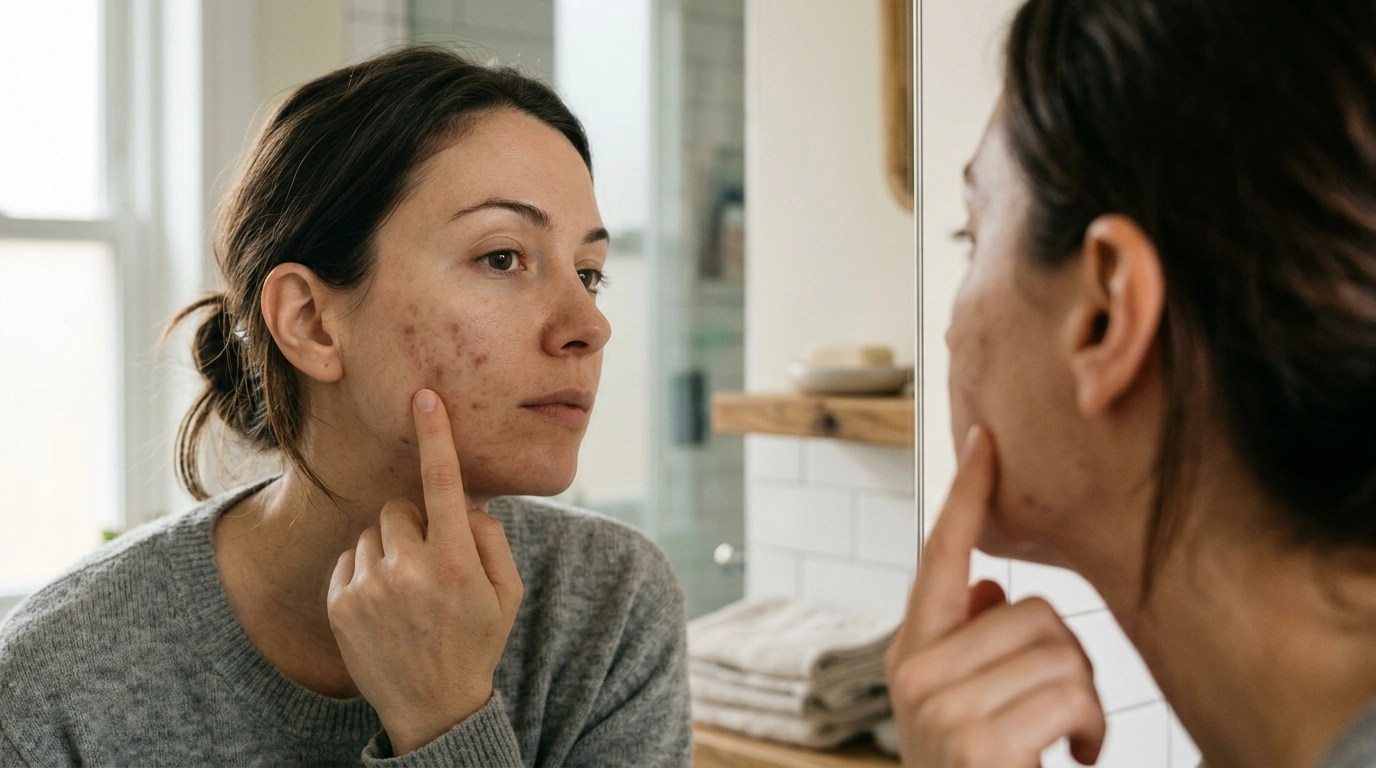
Pimple marks are color changes left after a breakout: brown/gray (post-inflammatory hyperpigmentation, or PIH) or red/pink/purple (post-inflammatory erythema, or PIE). When you run a clean fingertip over the area, the surface usually feels smooth.
Acne scars are structural changes in the skin: depressions (ice pick, boxcar, rolling) or raised areas (hypertrophic/keloid). The texture is uneven, and the shape tends to stay put even after redness fades.
A quick at-home test: check your skin under side lighting. If shadows form because the surface dips or rises, treat it as a scar. If it looks flat but discolored, treat it as a mark.
It’s also common to have both at once—so progress can look uneven unless you address each type with the right tool.
The comparison table: identify what you’re treating before buying another serum
Use this table as your first checkpoint. If the issue is mostly color, prioritize gentle brightening + barrier support + strict sun protection. If the issue is texture, topicals can improve overall skin quality, but procedures often move the needle faster on true scars.
| What you notice | Most likely category | Typical cause | What helps most | What to avoid |
|---|---|---|---|---|
| Flat brown/gray spots after acne | Post-inflammatory hyperpigmentation (PIH) | Melanin overproduction during healing | Daily SPF; azelaic acid; gentle retinoid; niacinamide; patient consistency | Skipping sunscreen; harsh scrubs; picking |
| Flat red/pink/purple marks that linger | Post-inflammatory erythema (PIE) | Dilated or irritated surface blood vessels | Daily SPF; calming barrier routine; azelaic acid; time; minimizing irritation | Over-exfoliation; strong acids too often; hot water |
| Indented pits or craters | Atrophic scars (ice pick/boxcar) | Collagen loss after inflammation | Derm procedures (microneedling/laser/subcision depending on type); supportive retinoid routine | Expecting spot treatments to erase texture quickly |
| Wavy, shallow depressions | Rolling scars | Tethering under the skin | Subcision ± filler; collagen-stimulating procedures; consistent retinoid support | Aggressive exfoliation that inflames skin |
| Raised, thickened bumps where acne was | Hypertrophic/keloid scars | Excess collagen during healing | Derm evaluation; silicone therapy; injections/other in-office options | Trying to “buff” it down with scrubs or peels at home |
Checklist: confirm your type in 60 seconds
- Touch test: Smooth surface suggests a mark; a dip or raised ridge suggests a scar.
- Daylight check: Brown/gray points to PIH; red/pink/purple points to PIE; shadowed edges point to texture changes.
- Time test: Track changes over 4–6 weeks. Marks often lighten gradually; scars typically change slowly and may need targeted intervention.
- Trigger check: Recent picking, squeezing, or harsh exfoliation increases the chance of lingering marks and worsened texture.
- Priority pick: Decide if your main goal is color, texture, or both—then build your plan accordingly instead of stacking random actives.
Treatment path A: fading pimple marks (PIH + PIE) without wrecking your barrier
Non-negotiable foundation: broad-spectrum sunscreen every morning. UV exposure can deepen PIH and keep redness hanging around longer than it needs to.
Choose one “main” active and stick with it for about 4 weeks before adding anything else:
- Azelaic acid: supports more even-looking tone and can be a friend to redness-prone skin.
- A retinoid: helps normalize turnover over time, which can gradually improve the look of leftover marks.
- A gentle exfoliant (AHA/BHA): use sparingly if you tolerate it—more isn’t better when you’re dealing with discoloration.
Treatment path B: improving acne scars (texture) with realistic expectations
If you want a derm-backed overview of common in-office options, the American Academy of Dermatology’s acne scar treatment guide is a helpful reference point.
A simple routine builder (AM/PM) using the checklist logic
AM (marks-focused)
PM (balanced)
If active acne is still present, prioritize acne control first (less new inflammation usually means fewer new marks and scars). For a refresher on acne triggers and treatment approaches, see the Mayo Clinic acne overview.
Common pitfalls that keep marks and scars looking “stuck”
Use the product checklist as your decision guide
If you want a printable, step-by-step version of this decision tree, our team put it into a focused download: The Ultimate Checklist for Pimple Marks vs. Acne Scars – Your Skincare Guide for Treating Marks and Scars Effectively. It’s designed to help you:
If you like our checklist format for building habits and tracking progress, you may also want: Hashtags to Go Viral on TikTok: The Ultimate Checklist for Boosting Your Reach.
FAQ
How long do pimple marks take to fade compared to acne scars?
Pimple marks often improve over weeks to months with daily sunscreen and consistent, gentle actives, while acne scars (texture) tend to change more slowly and may require procedures for meaningful improvement. Your timeline depends on skin tone, depth of inflammation, and how much irritation your routine causes.
Can retinoids treat both pimple marks and acne scars?
Retinoids can help pimple marks indirectly by supporting healthier turnover and can gradually improve mild textural irregularities by supporting collagen signaling. Start slowly, moisturize generously, and wear sunscreen daily since retinoids can increase sensitivity.
What should be avoided when trying to fade marks and improve texture?
Avoid picking, harsh scrubs, over-exfoliating, combining multiple strong actives at once, and inconsistent sunscreen use. Irritating products and too-frequent exfoliation can worsen PIE and trigger more noticeable PIH.















Leave a comment