Carry-On Only Travel: A Simple One-Bag Packing System
Everything You Need in a Single Carry-On: How to Travel Carry-On Only
Carry-on-only travel gets easier when every item earns its place: fewer decisions, faster airport transitions, and less time spent managing belongings. A simple, repeatable system—right-size bag, consistent packing layout, capsule wardrobe, and a short checklist—can cover most trips without feeling cramped or chaotic. The goal isn’t to pack “light” for its own sake; it’s to pack predictably so you always know what you have, where it is, and why it’s there.
Start With the Right Carry-On Setup
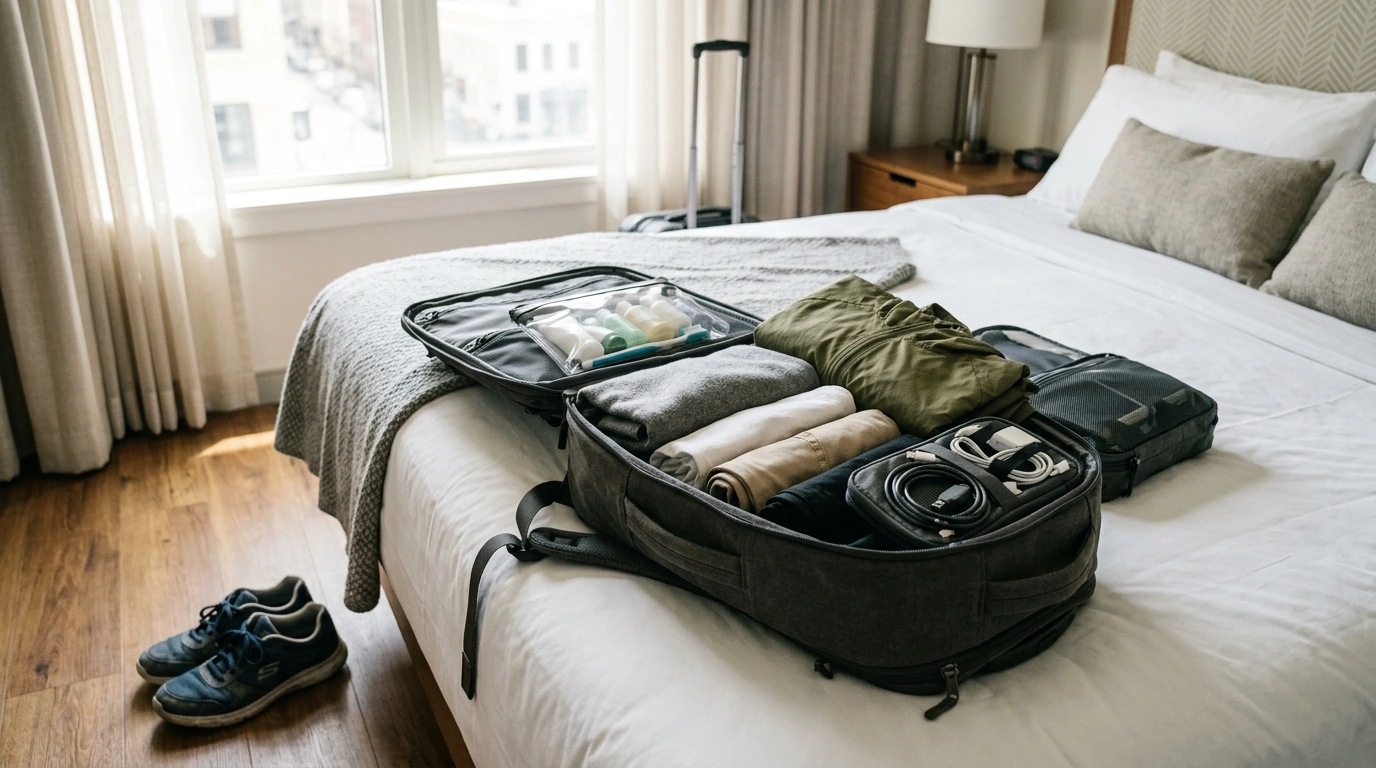
Your bag is the foundation of one-bag travel. Choose a carry-on that fits common airline limits and is comfortable across real-world terrain: station stairs, cobblestones, tight aisles, and small elevators. A clamshell opening (like a suitcase) makes packing and repacking dramatically faster, and internal compression straps help keep a tight load from slumping mid-trip.
External pockets can be helpful, but only if they’re secure. Two to four pockets is usually the sweet spot; beyond that, “organization” turns into scattered clutter and sneaky overpacking. Instead, assign a permanent “home” to essentials: a top pocket for documents and chargers, a reachable spot for your liquids bag, and one slim pocket for receipts, SIM tools, or tickets.
Carry-On-Only System: What Goes Where
| Category | What to pack | Where to place it |
|---|---|---|
| Documents & money | Passport/ID, 2 payment methods, travel insurance info | Top quick-access pocket or inner zip pocket |
| Liquids & toiletries | 3-1-1 liquids bag, toothbrush, deodorant, small essentials | Near the opening for fast security removal |
| Clothing core | 2–3 tops, 1–2 bottoms, underwear/socks, sleepwear | Packing cubes in main compartment |
| Warm layer | Light jacket or sweater | On top of cubes or worn during transit |
| Shoes | 1 extra pair + flip-flops (optional) | Shoe bag at base/side of main compartment |
| Tech | Phone cable, wall charger, power bank, earbuds | Small pouch in top pocket; laptop in sleeve |
| Laundry & organization | Foldable tote, stain remover pen, travel detergent sheets | Thin pouch or side pocket |
If you add a personal item, keep it genuinely slim (think a compact day bag) and light enough to avoid gate-check drama. A personal item should reduce friction, not add another “bag to manage.”
Build a Capsule Wardrobe That Mixes Effortlessly
A carry-on wardrobe works best when it’s built like a small “capsule”: fewer pieces that combine into more outfits. Start with a tight palette—two neutrals (like black and tan or navy and gray) plus one accent color. When every top matches every bottom, you stop packing backups “just in case” and start packing on purpose.
Aim for three to five days of clothing, then plan one wash. That might be a quick sink wash with detergent sheets, a laundromat stop, or a hotel machine—whatever is realistic for the trip. Lightweight, quick-dry fabrics are your best friend; bulky denim is fine if it’s the only pant you bring, but it can dominate your space if you pack multiples.
Use a simple formula to cover most situations: one outfit “up” (slightly dressier for dinners or meetings) and one outfit “down” (comfortable for long walking days). Then wear the bulkiest items in transit—your warmer layer and heavier shoes—so your bag stays compact and easy to stow.
Toiletries and Liquids Without the Security Hassle
For U.S. flights, TSA’s 3-1-1 rule is the baseline: liquids, gels, and aerosols must be in containers up to 3.4 oz (100 ml) and fit inside one quart-size bag. Keep that bag near the opening of your carry-on so you can remove it quickly when asked. For the official rule details, reference TSA’s Liquids Rule (3-1-1).
Tech and Travel Documents: Compact, Redundant, and Ready
Tech is where many carry-ons quietly gain weight. Simplify: one multi-port wall charger, one short cable per device type, and duplicates only when truly critical for work. Add a right-sized power bank for daily use, and remember that lithium batteries typically need to stay in the cabin rather than checked luggage; confirm specifics via FAA PackSafe guidance on batteries.
A Repeatable Packing Routine That Prevents Overpacking
Carry-On-Only Checklist (Copy, Save, Reuse)
Featured Options to Support Carry-On-Only Travel
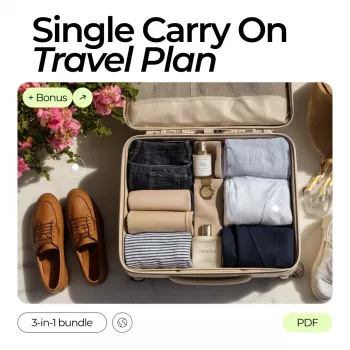
A consistent system is easier to repeat when your tools match the routine. If you want a ready-made approach that aligns with the one-bag method, start here: Everything You Need in a Single Carry On – How to Travel with Carry On Only. It’s designed to reinforce the habits that make carry-on-only feel effortless: fewer loose items, clearer categories, and faster transitions.
For travelers who work (or unwind) on screens while in transit, eye comfort can also be part of “packing smart.” A small digital guide can be easier to carry than extra gadgets: Preventing and Relieving Screen-Induced Eye Strain – Practical eBook Guide | Eye Strain from Screens What to Do | Digital Download.
FAQ
How many outfits are enough for carry-on-only travel?
Three to five days of clothing is usually enough when you plan one quick wash and stick to mix-and-match capsule colors. Wearing your bulkiest pieces in transit also frees up space for an extra top or layer.
What toiletries can go in a carry-on?
Most toiletries are allowed, but liquids, gels, and aerosols must follow TSA’s 3-1-1 rule for U.S. flights (3.4 oz containers in one quart-size bag). Solid alternatives (bars, sticks, tabs) reduce liquid limits, and medications plus essential hygiene items are fine to bring.
How can overpacking be avoided without feeling unprepared?
Pack by activity blocks, then remove one “just in case” item from each block before you zip the bag. Keep a strict shoe limit, and use a consistent pocket-and-cube system so essentials are easy to find and you don’t pack duplicates.













Leave a comment