Free Weight Starter Bundle: Routine, Progression & Tracking
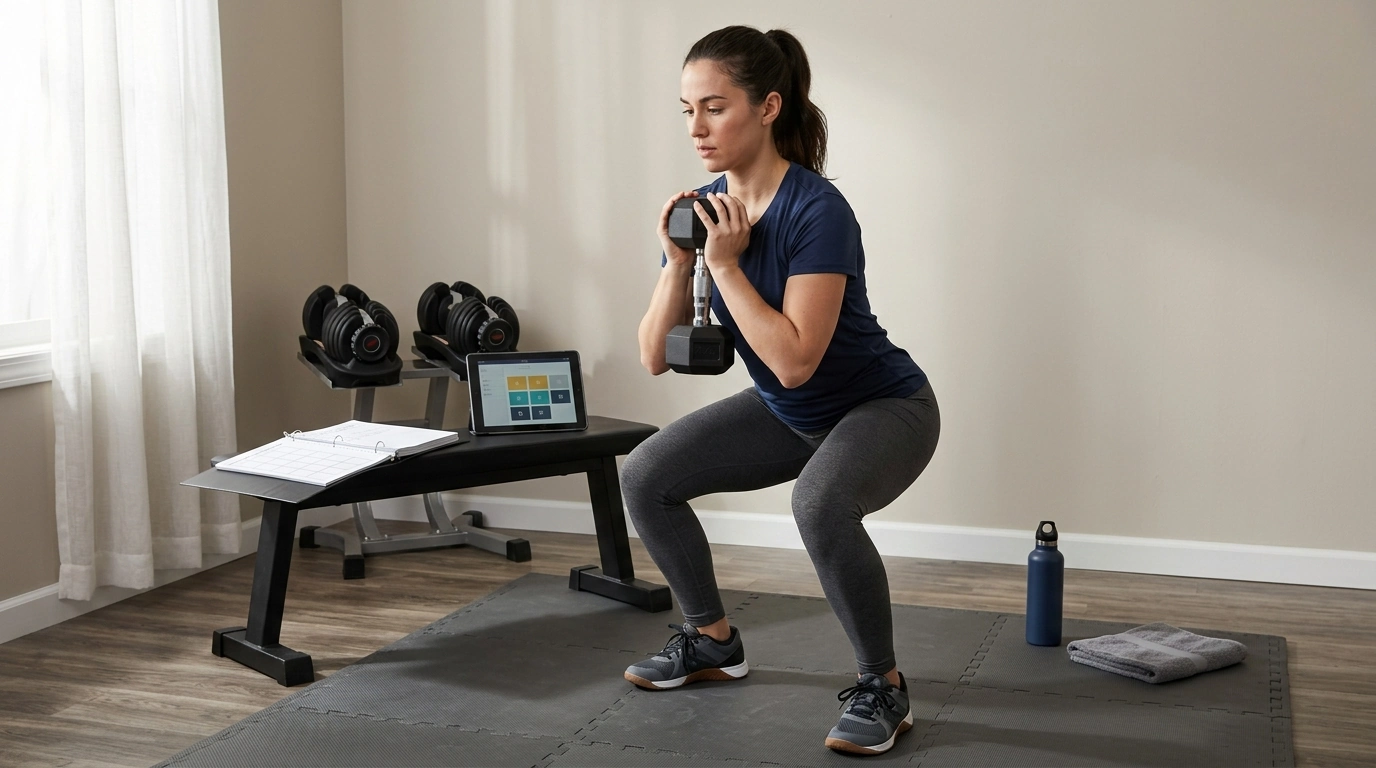
Free Weight Routine Starter Bundle – A 3-in-1 Digital Download Set for Strength Training
A beginner-friendly strength plan is easier to follow when workouts, progression, and tracking all live in one place. The Free Weight Routine Starter Bundle – 3-in-1 Digital Download Set for Strength Training is designed to help build a consistent free weight routine with clear structure, repeatable sessions, and a simple way to measure progress over time. Instead of bouncing between random workouts, you get a steady weekly rhythm you can repeat, refine, and progressively build on. For more guidance, see Fitness program: 5 steps to get started – Mayo Clinic.
What’s included in the 3-in-1 digital download set
- Three coordinated resources that work together: a guided routine, a progression approach, and tools to track workouts.
- Less guesswork around exercise selection, set/rep targets, and what to do next week when you repeat the session.
- Digital convenience for quick access on a phone or tablet, with the option to print pages for a gym binder.
The big advantage of a bundled system is continuity: you’ll know what you’re training today, why it matters, and how to adjust the next time you perform the same lift. That consistency is one of the fastest ways to build confidence under free weights. For further reading, see [PDF] No Equipment Home Workouts: strength workouts – UT RecSports.
Who this starter bundle fits best
- New or returning lifters who want a clear plan built around fundamental movement patterns.
- Home-gym or commercial-gym training using dumbbells/free weights and basic equipment.
- Anyone who wants repeatability instead of constantly changing workouts that are hard to track.
- People who like step-by-step structure: warm-up, main lifts, accessories, and recovery guidance.
If the main barrier has been “not knowing what to do,” a starter routine that lays out the session flow can be the difference between sporadic training and a reliable habit.
How to use the bundle in the first 2 weeks
- Start conservatively and prioritize technique: stable torso, controlled lowering, and a full pain-free range of motion.
- Choose weights with 1–3 reps in reserve on most sets so you can practice clean reps and recover well.
- Track every working set so next week’s progression is simple and objective.
- Keep rest times consistent (about 60–120 seconds for most accessory work; longer for heavier compound lifts).
- If soreness runs high, reduce volume (fewer sets) before reducing training frequency.
During the first two weeks, the goal is to “earn” progression by showing up consistently and repeating movements enough to make them feel familiar. Loads can rise quickly later—once form and recovery are stable.
A simple weekly structure (example schedule)
Aim for three strength sessions per week to start. Add a fourth day only after consistency is automatic and you’re recovering well (sleep is solid, soreness is manageable, performance isn’t slipping). Off days work best when they support recovery rather than compete with it.
| Day | Focus | Session outline | Notes |
|---|---|---|---|
| Mon | Strength A | Main lift + secondary lift + 2 accessories + core/finisher | Keep loads moderate; record all sets |
| Tue | Recovery | 20–40 min easy walk/cycle + brief mobility | Stop well before fatigue |
| Wed | Strength B | Main lift + pull movement + 2 accessories + core | Match or slightly improve last week’s reps/weight |
| Thu | Recovery | Light cardio or mobility | Optional if soreness is low |
| Fri | Strength C | Main lift + push movement + 2 accessories + carry/conditioning | Prioritize form; progress one variable |
| Sat | Optional | Easy activity (walk, yoga, sport) | Keep it light |
| Sun | Rest | Full rest or gentle mobility | Plan next week’s targets |
Progression that keeps results moving
- Use one progression rule per exercise to stay consistent—commonly “add reps first, then add weight.”
- Increase weight in small jumps, especially for upper-body lifts, so you don’t stall early.
- If form breaks down, hold the load steady and build reps or improve tempo control (slower lowering, clean pauses).
- Deload when needed: reduce sets or load for a week if performance drops multiple sessions in a row.
- Review logs weekly and look for steady improvement in total reps, load, or execution quality.
This kind of “quiet progression” is how beginners build strength fast without constantly testing max effort. For general resistance training guidelines and safe progressions, refer to the CDC physical activity guidelines and the American College of Sports Medicine (ACSM) resistance training resources.
Equipment basics for free weight training at home or in the gym
Common mistakes this kind of starter plan helps avoid
Helpful digital add-ons (optional)
- Free Weight Routine Starter Bundle – 3-in-1 Digital Download Set for Strength Training (the core system for routine + progression + tracking)
- Preventing and Relieving Screen-Induced Eye Strain – Practical eBook Guide (Digital Download) (useful if you log workouts on a phone/tablet and want better screen habits)
FAQ
How many days per week should a beginner lift weights?
Two to three days per week is a strong starting point for most beginners. When soreness is manageable, sleep is steady, and performance is improving, you can add volume or an extra day later.
Is it better to increase weight or reps first?
Adding reps within a target range first is usually the smoothest way to progress, then increase weight once you consistently hit the top of that range with good form. Use a “reps in reserve” approach—finishing most sets with about 1–3 reps left—to keep technique sharp.
Can this work with dumbbells only?
Yes—dumbbells alone can build strength and muscle when you train consistently and track progression. Common substitutions include goblet squats, dumbbell RDLs, dumbbell bench or floor presses, one-arm rows, and split squats.
















Leave a comment