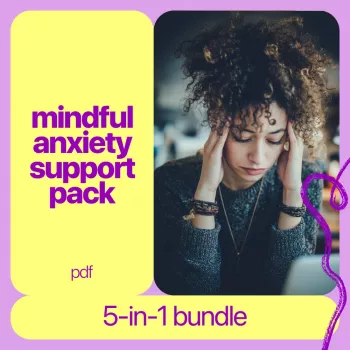
5-in-1 Mindful Anxiety Support Pack for Stress Relief

Mindful Anxiety Support Pack: A 5-in-1 Bundle for Stress Relief and Emotional Intelligence
Anxiety can show up as racing thoughts, tension, irritability, sleep disruption, or a constant sense of “being on.” A structured mindfulness-based toolkit can help create steadier routines for calming the nervous system while also building emotional intelligence skills like naming feelings, noticing triggers, and responding with intention. This 5-in-1 bundle is designed to be used in short, repeatable sessions—ideal for busy days, recovery periods, or anyone who benefits from clear prompts and guided practices.
What this support pack is designed to help with
- Stress relief through simple, repeatable grounding practices that fit into daily routines
- Emotional intelligence building: identifying emotions, tracking patterns, and practicing healthier responses
- Better self-regulation: shifting from reactive to responsive choices during anxious moments
- Consistency support: using a “small steps” approach rather than relying on motivation alone
- A gentler way to build coping skills that complements (not replaces) professional care when needed
Stress can affect the body in real, measurable ways—sleep, digestion, muscle tension, and attention can all take a hit. For an overview of how stress impacts the body, see the American Psychological Association’s resource on stress effects. For anxiety-specific context, the National Institute of Mental Health offers a clear breakdown of anxiety disorders and common symptoms.
What’s included in the 5-in-1 bundle (and how each part fits together)
The goal of a bundle like this isn’t to “do everything.” It’s to make it easier to practice the right skill at the right moment—especially when the mind is loud and energy is low.
- A guided structure that encourages starting with short sessions and gradually expanding as confidence grows
- Mindfulness exercises to reduce mental noise and bring attention back to the present moment
- Emotion labeling and reflection prompts to improve clarity about what’s being felt and why
- Stress-reset practices that can be used before meetings, after difficult conversations, or at bedtime
- A practical flow: notice → name → normalize → choose the next supportive action
Use-map: matching common moments to a helpful bundle practice
| Moment | What it can feel like | A helpful practice to try | Time needed |
|---|---|---|---|
| Morning start | Dread, mental clutter, tight chest | 2–5 minute grounding + intention setting | 2–5 min |
| Midday overload | Racing thoughts, irritability, scattered focus | Sensory reset + breath pacing | 3–7 min |
| Before a tough conversation | Fear of conflict, spiraling scenarios | Emotion labeling + response planning | 5–10 min |
| After a trigger | Shame, anger, rumination | Self-compassion prompt + body scan | 5–12 min |
| Bedtime | Restlessness, looping thoughts | Wind-down routine + gentle mindfulness | 8–15 min |
A realistic weekly routine (so it doesn’t become “one more thing”)
Many people start strong and then stop when life gets busy. A more sustainable approach is to practice “small, repeatable, almost-too-easy” sessions that build familiarity and trust.
- Days 1–2: focus on short grounding sessions to build the habit and reduce resistance
- Days 3–4: add emotion check-ins—one in the afternoon and one in the evening
- Days 5–6: practice response skills (pause, name the emotion, choose a small next step)
- Day 7: review patterns (common triggers, times of day, body signals) and plan one supportive change
- Keep the goal small: consistency beats intensity; aim for “often” rather than “perfect”
If you’re new to mindfulness, it can help to treat it like brushing your teeth: short, regular, and not dependent on inspiration. For an evidence-informed look at mindfulness and meditation—including safety considerations—visit the National Center for Complementary and Integrative Health (NCCIH).
Building emotional intelligence while reducing stress
Emotional intelligence isn’t about “being calm all the time.” It’s the skill of noticing what’s happening internally, understanding what it means, and choosing a response that supports your long-term well-being.
Who this bundle tends to work best for
When to seek additional support
Product details and how to get started
For a guided, all-in-one toolkit, explore the Mindful Anxiety Support Pack: 5-in-1 Bundle for Stress Relief & Emotional Intelligence. A simple way to begin is to pick one short practice and repeat it for several days until it feels familiar.
Quick start checklist
| Step | What to do | Why it helps |
|---|---|---|
| 1 | Choose a consistent time window (2–10 minutes) | Reduces decision fatigue and increases follow-through |
| 2 | Pick one calming practice to repeat for several days | Builds safety and familiarity |
| 3 | Add a daily emotion check-in (name + need) | Improves emotional clarity and reduces reactivity |
| 4 | Review once weekly and adjust one habit | Creates progress without overwhelm |
Helpful add-ons for modern stressors
If stress is fueled by long screen days, the Preventing and Relieving Screen-Induced Eye Strain – Practical eBook Guide can support more comfortable work sessions (less squinting and tension can make calming down easier later). If your anxiety is tied to content deadlines or inconsistent routines, the TikTok Sprint Blueprint: Your 7-Step Weekly Content Checklist can help reduce last-minute scrambling by turning creative work into a repeatable weekly plan.
FAQ
How quickly can stress relief show up with mindfulness-based practices?
Some people notice a shift in the moment—slower breathing, less muscle tension, or fewer racing thoughts. Deeper, more lasting changes typically come from repeating short practices consistently over several weeks.
Is this bundle suitable for beginners who have never practiced mindfulness?
Yes, especially when you start gently with short grounding sessions. Distraction is normal; the practice is simply returning attention without judging yourself.
Can this be used alongside therapy or medication?
It can work well as complementary skill-building between sessions or alongside a treatment plan. For personalized guidance—especially with intense symptoms—check in with your clinician.













Leave a comment