Safe Rides: Pet Car Safety Plan for Calm Trips
Safe Rides: A Pet Owner’s Car-Safety Plan for Calm, Secure Trips
Car rides can be part of a genuinely good life with pets—errands, vet visits, day trips, and weekends away—without turning your back seat into a risk zone. Our team built Safe Rides: Protecting Your Pets in the Car (ebook) as a practical, real-life plan: prevent injuries you can prevent, lower stress before it snowballs, and create a repeatable routine you can personalize for your dog or cat. For more guidance, see Dog Hit by Car, No Visible Injuries: Critical Next Steps.
If you’ve ever had a pet pace, drool, howl, climb into the front seat, or try to bolt when the door opens, you already know the goal isn’t “perfect behavior.” The goal is a safer setup and a calmer, more predictable trip—so you can focus on driving and your pet can settle. For further reading, see How to Relieve Dog Car Anxiety and Fear of Car Rides.
Start With the Non‑Negotiables: Safety for Pets and Drivers
Every safe trip starts with the same baseline rules. Once these are locked in, everything else (comfort, snacks, music, stops) becomes easier.
- Secure every pet for every trip. An unrestrained pet can become a projectile in a sudden stop and can also interfere with steering, pedals, or your line of sight.
- Match the restraint style to size and behavior. Common options include a secured carrier/crate, a vehicle harness (crash-tested when available), or a barrier paired with a secured harness for larger dogs.
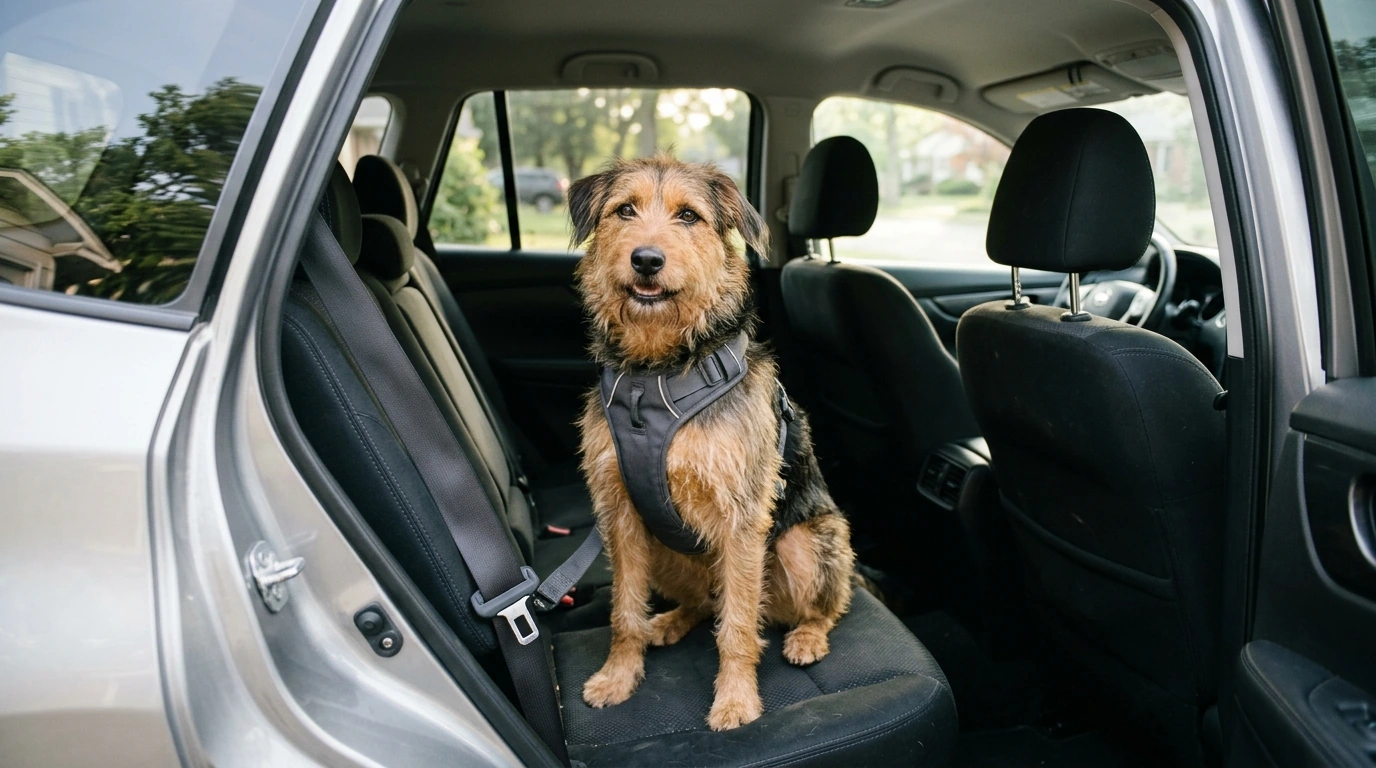
- Keep pets out of front seats. Airbags and impact zones increase risk; restrained back-seat placement is typically safer.
- Never allow heads out the window. Flying debris and eye injuries are real, and sudden movements can pull you into a dangerous swerve.
- Plan for short stops. Vehicle temperatures can climb fast, even on mild days; leaving pets in a car is a high-risk choice.
For broader pet travel safety guidance, we also recommend reviewing resources from the American Veterinary Medical Association (AVMA) and the CDC (especially if your travel crosses state lines or includes public spaces).
Set Up the Car: Where Pets Ride Best (and What to Avoid)
Think of your car setup as “contain, anchor, and reduce distractions.” Contain your pet in a defined space, anchor the restraint so it can’t slide or tip, and reduce anything that triggers roaming or reactivity.
Best placements that work in real life
- Back seat is the go-to for most households. Use a secured harness or a carrier strapped in via the seat belt path.
- Carriers belong on a seat, not on your lap. Choose a stable base and anchor tightly to prevent sliding.
- SUV cargo setups require extra attention. Anchor crates to cargo tie-down points and prevent forward movement; avoid loose crates that can shift during turns or stops.
What to avoid (even if it feels “fine”)
- Unanchored beds and booster-style setups that aren’t actually secured.
- Driving with an arm around your dog or allowing lap riding.
- Long tethers that allow your dog to reach the front seat.
- High-value chew items that increase arousal or create choking/crumb mess—pick low-mess, low-choking options and supervise.
Stress-Free Travel: Before the Engine Starts
Smart AI Tips That Actually Help: Personalize Your Pet-Travel Routine
Road-Trip Readiness: Pack Once, Use Forever
Quick Car-Safety Setup Checklist (Choose One Restraint Path)
| Scenario | Best Fit | How to Secure | Common Mistake to Avoid |
|---|---|---|---|
| Small dog or cat | Carrier (hard-sided or reinforced soft carrier) | Thread seat belt through carrier path or strap down to prevent sliding | Carrier placed on lap or left unbuckled |
| Medium to large dog | Vehicle harness (ideally crash-tested when available) | Attach to seat belt system or dedicated car tether rated for vehicle use | Clipping to a collar or using long tethers that allow front-seat access |
| SUV/cargo area travel | Anchored crate or barrier + harness | Use cargo anchors/tie-down points; keep crate from shifting forward | Free-floating crate that slides during turns/stops |
| Anxious traveler | Carrier + cover or harness + shaded windows | Reduce visual input, keep airflow steady, start with short sessions | Jumping straight into a long trip without practice |
Put It All Together With the Safe Rides Ebook
If you want a single, step-by-step system you can reuse for every drive, we designed Safe Rides: Protecting Your Pets in the Car (ebook) to help you pick a restraint method, set a consistent seating plan, and layer in stress-reduction routines that fit your household.
And because calmer travel also depends on calmer humans, many customers pair it with focused screen breaks and eye comfort during planning and long travel days: Preventing and Relieving Screen-Induced Eye Strain (ebook).
FAQ
Is it safer for a pet to ride in a carrier or a harness?
Both can be safe when they’re properly secured and properly fitted. A well-anchored carrier tends to work especially well for cats and small dogs, while many dogs do well in a vehicle harness (crash-tested when available) attached to the seat belt system or a rated tether.
How can car-anxious pets be helped without making rides a bigger ordeal?
Start with short, low-pressure sessions (just getting in and settling) and keep cues consistent: same harness, same seat, same phrase, and predictable breaks. Reduce stimulation with steady airflow and lower visual input, and ask your vet for support if nausea or panic is persistent.
What should always be in a pet travel kit for car rides?
Keep water and a bowl, leash and backup leash, harness, waste bags, wipes, towels, and basic pet first-aid supplies. Add updated ID (tags and microchip info) plus an emergency pet profile card with your vet and a backup contact number.














Leave a comment