Why Viral Videos Hook Fast: Psychology of Watch & Share
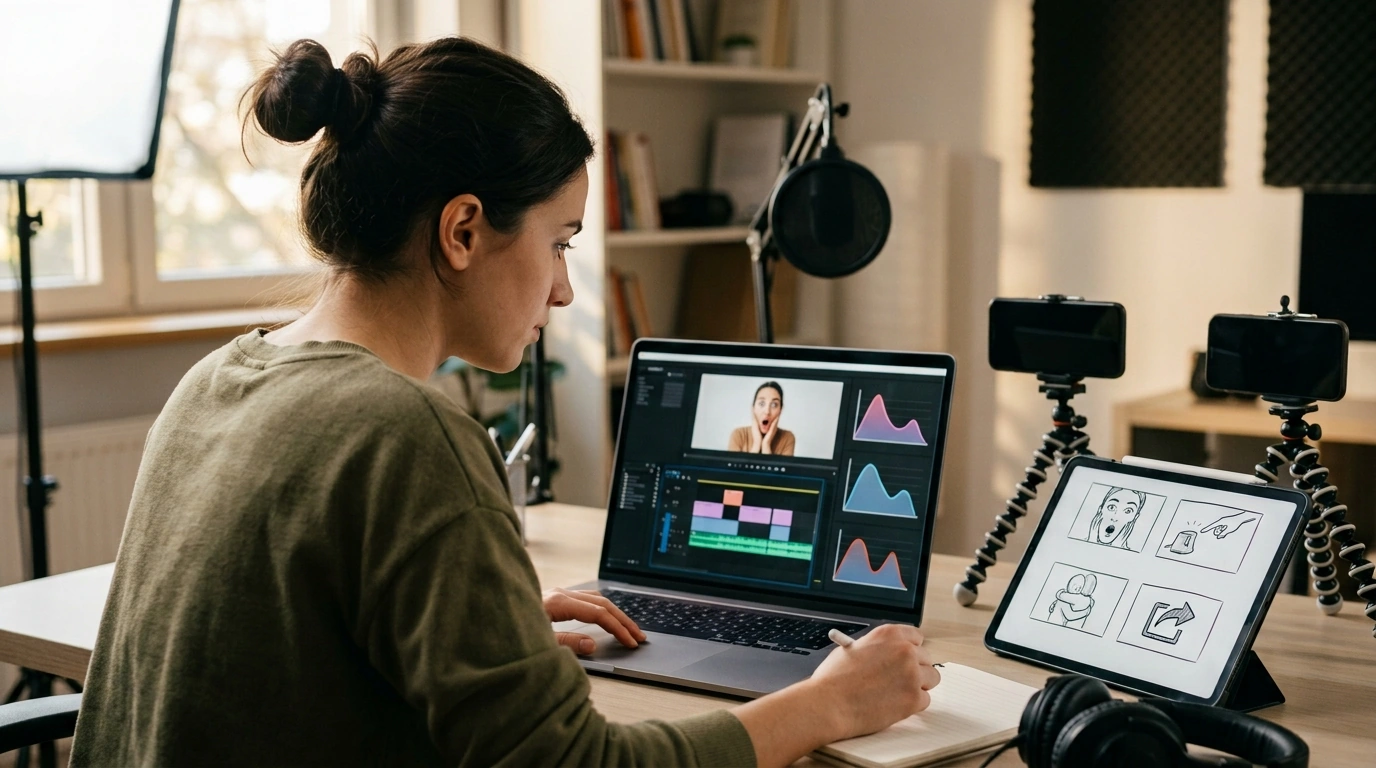
Hooked in Seconds: The Psychology Behind Viral Videos
Viral videos rarely succeed by accident. The strongest performers combine quick attention hooks with a clear emotional payoff, effortless viewing, and a reason to share. The good news: the “magic” is mostly psychology—how the brain decides what’s worth attention, what feels rewarding, and what’s worth passing along.
Below is a practical breakdown of what drives stops, watches, rewatches, comments, and shares—plus a simple system to turn those principles into repeatable creative decisions.
What “hooked in seconds” really means
The opening moments aren’t just an intro—they’re a decision point. Viewers are scanning for immediate relevance, a curiosity gap, or a pattern interruption (something that doesn’t match what they expected). If the first beat feels fuzzy, they scroll.
Clarity beats complexity. A viewer should understand the premise fast: what’s happening, why it matters, and what they’ll get if they stick around. That doesn’t mean giving away the ending; it means giving a clean “micro-promise” (a small, specific expectation) and paying it off quickly.
Those early seconds also influence distribution. Platforms typically watch for signals like completion rate, rewatches, saves, shares, and early engagement velocity. A strong hook nudges the viewer toward a complete watch, which increases the chance the video gets another round of impressions.
Psychology triggers that increase watch time and sharing
Great videos are built around a few reliable triggers—especially when the creator makes progress visible. Curiosity works best when the audience can feel the “closing” of the loop: step-by-step movement toward the answer instead of endless teasing (a concept related to how curiosity is defined and studied in psychology: APA Dictionary of Psychology).
Emotions are share accelerators. Awe, humor, surprise, empathy, and even righteous anger can all drive sharing when they’re paired with a clear point. If the emotion is vague, it becomes noise. If it’s pointed, it becomes a message someone wants to send to others.
Social proof and identity matter, too. People share content that signals who they are: their taste, their standards, their niche knowledge, their values, or their community membership. Practical value is another reliable trigger—sharing can be a way to look helpful, not just entertained.
Common triggers and when to use them
| Trigger | Best for | Example opener |
|---|---|---|
| Curiosity gap | Tutorials, reveals, before/after | “This one change doubled my results—here’s the exact setting.” |
| Awe/surprise | Experiments, transformations, stunts | “Watch what happens when you do this for 30 seconds.” |
| Relatable pain | Problem/solution, productivity, wellness | “If this keeps happening to you, try this instead.” |
| Social identity | Niches, communities, trends | “Only designers will notice this mistake…” |
| Practical value | How-tos, checklists, quick wins | “Three steps to fix this today—step one is free.” |
The “3-second system” for opening lines and visuals
If you want a dependable opener, treat the first 3 seconds like a product demo: show the outcome, prove it’s real, and make the viewer feel like the video is “for them.”
- Start with the outcome: lead with the result (the transformation, the before/after, the finished screen, the punchline reaction), then rewind.
- Use contrast: “Most people do X, but X fails because…” creates immediate tension and makes the next seconds feel necessary.
- Make the viewer the main character: speak to a specific scenario (“If you edit at night and your eyes burn…”) rather than a generic audience.
- Pair words with proof: on-screen demos, bold text, or a quick visual payoff prevents the hook from feeling like empty hype.
- Avoid friction: skip long intros, vague teasers, and slow camera movement—anything that delays the promise.
This aligns with how recommendation systems look for early engagement and satisfaction signals; TikTok’s overview is a helpful reference point for thinking in terms of viewer response rather than creator intent (TikTok Newsroom).
Retention design: keep the promise, increase the pace
A strong hook earns the click; retention earns distribution. The goal is simple: keep delivering small, frequent “rewards” so the viewer’s brain never feels like it’s wasting time.
When this works, sharing becomes more likely because the viewer feels confident recommending it. Research on why content spreads often points to emotional intensity and social transmission—useful context when designing for “sendability” rather than passive likes (Journal of Marketing Research: What makes online content viral?).
Turn psychology into a repeatable content workflow
Weekly sprint checklist (lightweight version)
| Phase | Goal | Deliverable |
|---|---|---|
| Pick 5 ideas | Choose concepts with clear payoff | List of 5 titles + hook lines |
| Draft hooks | Create 2 hook options per idea | 10 hook variants |
| Record | Capture proof quickly | 5 raw videos |
| Edit for pace | Remove friction and add checkpoints | 5 finished cuts |
| Review metrics | Spot patterns and adjust | 1-page learning notes |
Tools to accelerate results
- Hooked in Seconds: The Psychology Behind Viral Videos (Digital Guide) for deeper hook frameworks, emotional triggers, and packaging decisions you can apply to scripts and edits.
- TikTok Sprint Blueprint: 7-Step Weekly Content Checklist for a simple weekly sprint structure that keeps production steady without overthinking.
- Preventing and Relieving Screen-Induced Eye Strain (Practical eBook) for screen-comfort habits that make long editing sessions more sustainable.
FAQ
How long should the opening hook be for short-form videos?
Aim for immediate clarity in the first 1–3 seconds. Show the outcome or the tension first, then add only enough context to make the next moment irresistible.
What makes viewers share a video instead of just liking it?
Sharing increases when the video gives social currency (it helps someone signal identity), creates a strong emotion worth passing on, or delivers practical value that feels useful to others.
How can a creator test hooks without constantly changing everything?
Keep the core idea and structure the same and only change the first line and/or first visual across multiple posts. Compare retention and shares to see which hook format consistently earns longer watches and more saves.















Leave a comment