Prevent Creator Burnout: Reset Plan + Digital Guide
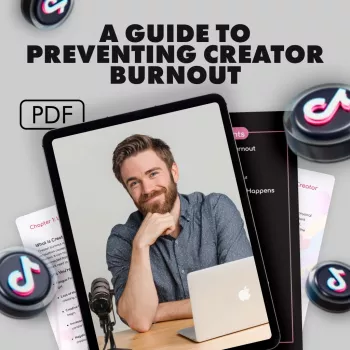
A Guide to Preventing Creator Burnout: A Practical Reset for Content Creators (Digital Download)
Creator burnout rarely arrives with a dramatic “final straw.” More often, it sneaks in through always-on posting, pressure to perform, and the slow erosion of boundaries between your work and your life. Our team built this guide-based approach around prevention—so you can spot early signals, create a workflow you can repeat on normal weeks, and put systems in place that protect your energy without sacrificing consistency.
Burnout is also more than “being tired.” The World Health Organization (ICD-11) defines burn-out as an occupational phenomenon related to chronic workplace stress that hasn’t been successfully managed. For creators, “workplace stress” can follow you everywhere—because your workplace is often your phone.
What creator burnout looks like (before it becomes a wall)
Early burnout signals tend to be subtle: irritability, dread before you hit record, slower editing, and those looping “why am I even doing this?” spirals. Many creators also run into a specific cocktail of stressors—algorithm volatility, constant comparison, and the temptation to turn every moment into a post.
A helpful distinction: tiredness improves with rest; burnout tends to persist even after time off because the underlying system (workload, expectations, boundaries) hasn’t changed. Prevention isn’t about squeezing out more output—it’s about reducing friction, protecting attention, and refusing to treat productivity as the only proof you’re doing “enough.”
The core causes: overload, no recovery, and unclear boundaries
Overload
Overload often looks like too many platforms, too many formats, and too many deadlines—many of them self-assigned. When everything is a priority, you end up constantly switching contexts, which drains focus and makes each post feel harder than it should.
No recovery
Recovery isn’t “rest” if it still includes trend-chasing, scrolling, DMs, comments, or brainstorming in the background. Chronic stress can show up physically, too; the American Psychological Association outlines how stress affects the body, including sleep and mood—two things creators often rely on to stay creative and resilient.
Unclear boundaries
If work happens everywhere (bed, couch, dinner table), your brain never fully clocks out. That’s one reason sleep can fall apart quickly, and sleep loss compounds everything—attention, emotional regulation, and creativity. If you’re noticing a pattern, the NIH (NHLBI) overview on sleep deprivation is a useful reality check.
A simple burnout-prevention system: Pace, Protect, Prioritize
Pace
Choose a posting rhythm you can repeat during average weeks, not just high-energy weeks. Consistency that depends on “feeling inspired” is fragile; consistency that depends on a realistic pace is sustainable.
Protect
Block time for creation and time for recovery—both belong on your calendar. If recovery isn’t scheduled, it’s the first thing your workload will steal.
Prioritize
Pick one primary platform or one primary content type for a season. Everything else becomes supporting-only. This doesn’t limit your growth; it reduces decision fatigue so you can show up with more clarity.
We also recommend “minimum viable consistency”: a baseline that maintains momentum without demanding constant intensity. Then build a reusable pipeline you can run on repeat: idea capture → outline → batch record/write → batch edit → schedule → engage in a defined window.
Early-warning dashboard: track the signals that matter
One of the fastest ways to prevent burnout is to track what changes before you crash. Notice both inputs (sleep, breaks, workload) and outputs (focus, creativity, enjoyment). Keep it simple: a weekly check-in with 1–5 ratings is enough to spot patterns.
| Signal | What it can mean | Yellow (adjust now) | Red (pause and reset) |
|---|---|---|---|
| Dreading creation | Too much pressure or unclear scope | Reduce deliverables; switch to lighter formats | Take 48–72 hours off publishing; reassess goals |
| Sleep disruption | Overstimulation or late-night work loops | Set a hard stop time; reduce evening screen time | Prioritize recovery week; cut nonessential tasks |
| Editing/production feels impossible | Decision fatigue and workload creep | Batch simple edits; use templates; shorten content | Pause complex projects; return to a single format |
| Scrolling replaces creating | Avoidance and comparison spirals | Time-box social apps; schedule engagement windows | App break + content detox; rebuild routine |
| Resentment toward audience/clients | Boundaries are being crossed | Update response times and office hours | Reset expectations; consider removing access points |
Reset week: a gentle way to keep showing up without burning out
Boundaries that actually work for creators (scripts included)
Inside the digital download: a guide built for real-life consistency
If you want a structured way to build your prevention system (and a repeatable reset routine), start here: A Guide to Preventing Creator Burnout (digital download).
Pair it with a lighter workload: simplify discovery and planning
If TikTok is part of your mix, simplifying hashtag choices can reduce research time and keep posting sessions shorter. Our team made a streamlined option you can use as a repeatable planning shortcut: Hashtags to Go Viral on TikTok: The Ultimate Checklist for Boosting Your Reach.
FAQ
How can content creators prevent burnout without disappearing from social media?
Use maintenance mode: reduce frequency, repurpose what you already have, batch the basics, and time-box engagement into defined windows. A reset week approach helps you keep showing up while lowering the load and restoring recovery.
What are early signs of creator burnout?
Common signs include dread before creating, avoidance scrolling, sleep disruption, irritability, slower production, numbness about results, resentment toward your audience or clients, and difficulty focusing. Tracking a few signals weekly makes these patterns easier to catch early.
Is this burnout prevention guide a physical product or a download?
It’s a digital download created for content creators who want a practical prevention system and a repeatable reset routine. You can use it on a reset day or as a quick weekly check-in tool.















Leave a comment