Scan, Flag, Swap: Hormone-Disrupting Ingredients Checklist
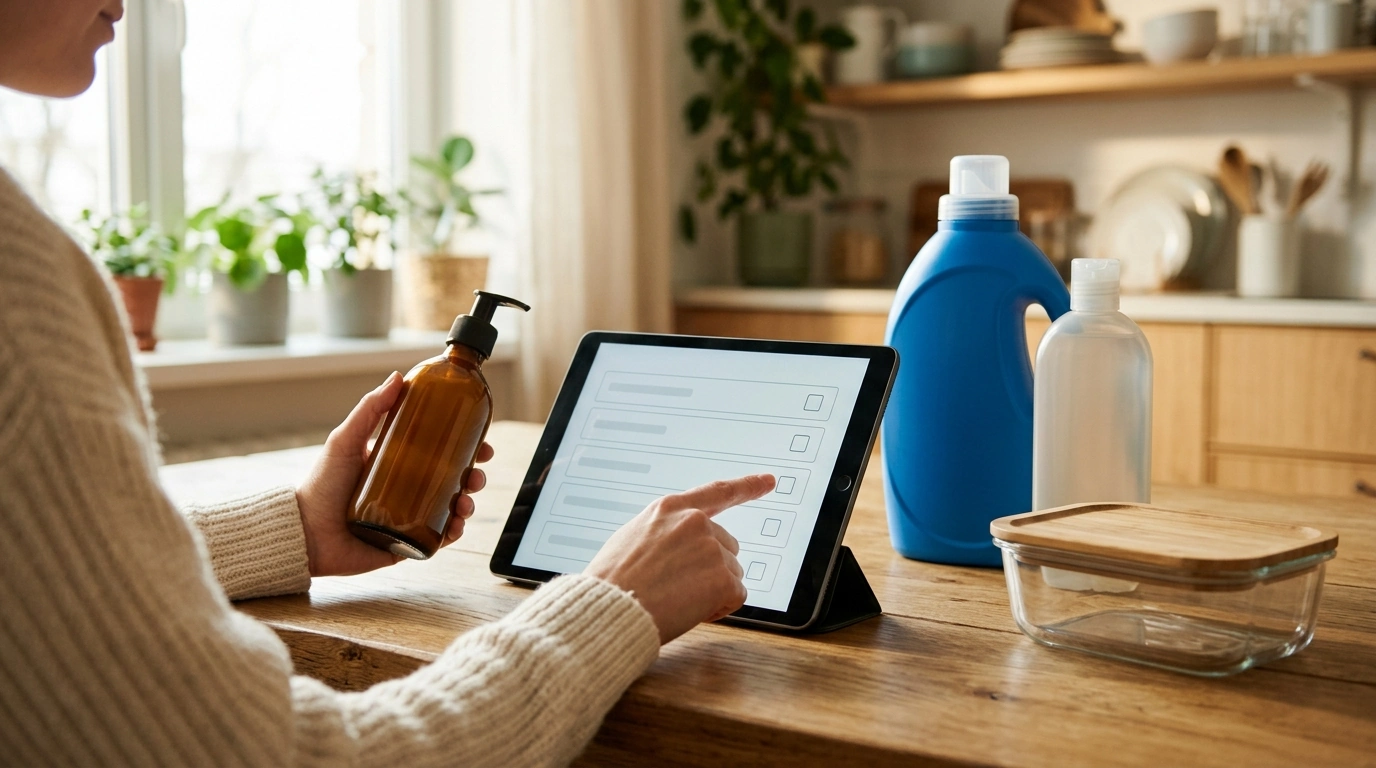
Your Hormone Harmony Checklist: A Simple, Repeatable Way to Spot Hormone-Disrupting Ingredients
Clean living gets complicated fast—especially when ingredient lists feel like another language. Our team created Your Hormone Harmony Checklist (digital download) to give you a quick, practical way to build awareness of hormone-disrupting ingredients, so everyday choices (bathroom, laundry, kitchen, and beyond) feel clearer and more consistent.
What this checklist is (and what it isn’t)
This is a digital checklist designed to help you track ingredient-awareness habits across the products you use most often. It’s built for quick audits: you scan labels, flag common hormone-disrupting ingredient categories, and jot down what to replace next—without turning your entire routine upside down.
It also matters to be clear about the boundaries: this checklist is not a diagnosis tool, and it’s not a substitute for medical advice. It’s a “progress over perfection” system that helps you prioritize the highest-contact, highest-frequency items first—so your time and budget go where they matter most.
Why ingredient awareness matters in everyday products
Hormone-disrupting chemicals (often discussed as endocrine disruptors) can show up in personal care, fragrances, plastics, household cleaners, and more. And because exposure can be repeated—through skin contact, inhalation (sprays and fragrance), and food contact materials—small choices can add up within your overall environment.
A checklist approach reduces decision fatigue. Instead of trying to memorize every chemical name, you build a simple scan-and-note routine that you can repeat any time you switch brands, try a new trend, or shop in a hurry. If you want deeper background reading from authoritative sources, the Endocrine Society, National Institute of Environmental Health Sciences, and the U.S. EPA provide helpful overviews.
A simple 3-step rhythm: scan, flag, swap
1) Scan
Use the checklist while holding the product (or viewing the label online). Focus on the ingredient panel and any “fragrance” claims. This keeps the task small and repeatable, even when you’re shopping quickly.
2) Flag
Mark ingredient categories that commonly raise hormone-disruption concerns, then add a simple note: “keep,” “use up,” or “replace.” Those three words prevent your notes from turning into an overwhelming to-do list.
3) Swap
Replace gradually—starting with products used daily, left on the skin, used on children, or used in enclosed spaces. A practical tip: keep a short “next-to-replace list” so shopping trips feel straightforward instead of stressful.
Where to start: the highest-impact product zones
If you’re not sure where to begin, start with what’s frequent, close-contact, and hard to avoid:
- Bathroom basics: deodorant, body lotion, body wash, shampoo/conditioner, styling products, perfume or body sprays.
- Skincare and cosmetics: moisturizer, sunscreen, foundation/concealer, lip products—anything that sits on skin for hours.
- Laundry and home scent: detergent, dryer sheets, fabric sprays, candles, plug-ins (often heavy on fragrance mixtures).
- Kitchen and food contact: plastic storage, nonstick cookware wear-and-tear, and anything used with heat.
- Baby/kids items: wipes, lotions, shampoos, and any scented products used frequently.
The win isn’t doing all of it today. The win is knowing exactly what your next best swap is.
Ingredient red flags to recognize quickly
Use this as a fast label-scan guide. The goal is awareness—then choosing alternatives that match your preferences and household needs.
| Label term to watch | Where it often shows up | Quick action with the checklist |
|---|---|---|
| Fragrance / Parfum | Perfume, lotions, detergents, candles | Flag as a priority for sensitive routines; consider fragrance-free options |
| Phthalates (sometimes not listed directly) | Often associated with fragranced products and plastics | When “fragrance” is present, note it and prioritize swaps in daily-use items |
| Parabens (e.g., methyl-, propyl-) | Lotions, cosmetics, hair products | Mark and compare with paraben-free alternatives |
| BPA/BPS (materials) | Some plastics, linings, receipts | Note food-contact items to replace gradually |
| Triclosan / antibacterial agents | Some soaps, personal care, older formulas | Flag and consider simpler alternatives |
| PFAS-related “stain/water resistant” claims | Some textiles, cookware, packaging | Note the claim and research safer options when replacing |
How to use the checklist as a monthly reset (without overhauling everything)
If you want a routine you can stick with, try this simple month-long cycle:
- Week 1: Personal care audit. Pick three daily items (like deodorant, lotion, face wash) and scan them.
- Week 2: Laundry + home scent audit. Flag fragranced staples first; switch one item at a time.
- Week 3: Kitchen contact audit. Identify the items that touch food most often and get heated.
- Week 4: Refill and replace. Use your notes to decide what gets replaced next and what can be used up first.
What makes a digital checklist easier to stick with
A simple next step
Start with one small zone—like deodorant + lotion + body wash—so your first round of scans feels easy. You can grab Your Hormone Harmony Checklist (digital download) and begin building your “scan, flag, swap” rhythm right away.
If you love checklists as a way to reduce mental load in other areas too, our team also offers TikTok Sprint Blueprint: Your 7-Step Weekly Content Checklist and Preventing and Relieving Screen-Induced Eye Strain – Practical eBook Guide for building healthier, more consistent routines beyond your product cabinet.
FAQ
How is this checklist different from just searching ingredients online?
Searching online is one-off, but the checklist gives you a repeatable system: scan, flag, swap. It also keeps your notes in one place, so you don’t re-research the same products every time you restock.
Do I need to replace everything at once to benefit?
No—gradual swaps are the point. Start with daily-use and leave-on products first, then work outward as items run out and your budget allows.
Is this checklist only for personal care products?
It works across personal care, cleaning, home fragrance, laundry, and kitchen/food-contact items. You can use the same scan-and-note habit anywhere you see an ingredient list or materials claim.
















Leave a comment