Strong Without Weights: Build Muscle Anywhere, No Gear
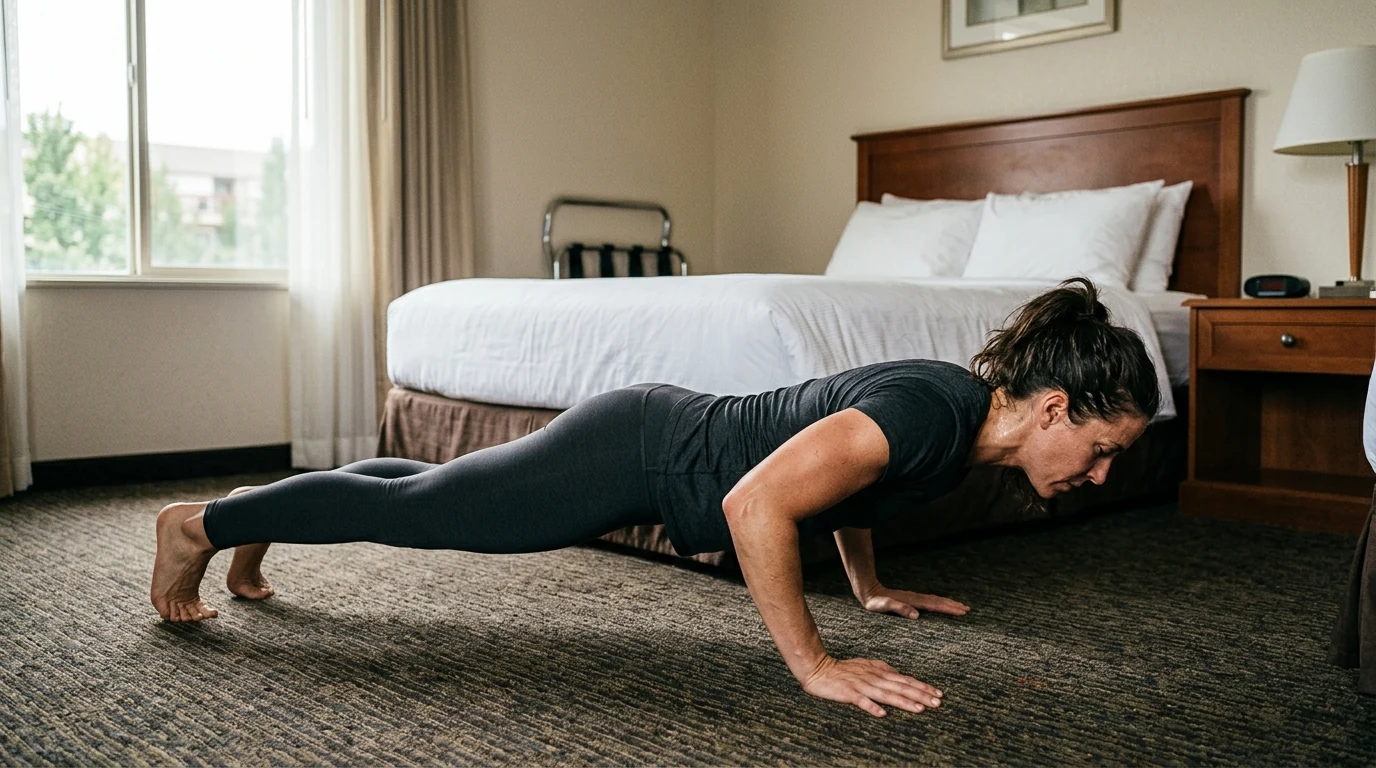
Strong Without Weights: Real Strength Training When Life Won’t Cooperate
Strength training doesn’t have to depend on a gym, machines, or a perfect schedule. Our team built Strong Without Weights for the days when space is tight, time is limited, or travel makes routines unpredictable—while still keeping the goal clear: build strength and muscle with no equipment. If you can use the floor, a wall, and a few feet of space, you can train.
What “strong without weights” actually looks like
Bodyweight training works because challenge isn’t only about load—it’s about leverage, control, range of motion, and effort. When you use those levers on purpose, your “no equipment workout” stops feeling like a backup plan and starts acting like a real strength program.
- Leverage: Moving your hands or feet changes difficulty fast (think incline push-ups to standard to feet-elevated).
- Tempo and pauses: Slower lowering phases and holds create high tension without adding external weight.
- Unilateral work: Single-leg and single-arm variations make your bodyweight “heavier” without equipment.
- Technical failure: Muscle-building sets end when form breaks down—not when the timer beeps.
For an evidence-based overview of how progression works in resistance training, see the ACSM Position Stand on progression models. You can also reference general activity recommendations from the CDC.
How our Strong Without Weights guide keeps you progressing
A common frustration with bodyweight routines is the “same workout forever” trap. Our team structured the guide around progressions, so you always have a next step—whether you’re starting from zero or you’ve already done push-ups for years.
- Clear progressions: Beginner-friendly entries and advanced options, without needing to buy gear.
- Small-space structure: Living room, bedroom, office, or hotel floor—your plan still fits.
- Simple progress rules: Progress via reps, tempo, holds, range of motion, and harder variations.
- Digital format: Keep it on your phone, tablet, or laptop so your training travels with you.
If you want the full plan in a simple, portable format, start here: Strong Without Weights (digital download).
A practical no-equipment weekly split (copy/paste friendly)
You’ll make solid progress on 3–5 training days per week, and you can scale it down to 2 full-body sessions during travel-heavy or hectic seasons. Each session should have a strength focus and a short finisher for work capacity—without turning every workout into a sweat test.
| Day | Focus | Example moves | Time |
|---|---|---|---|
| Day 1 | Lower body strength | Squat variation, split squat, hip hinge/glute bridge, calf raises | 25–40 min |
| Day 2 | Upper body push | Push-up variation, pike push-up, triceps variation, core | 20–35 min |
| Day 3 | Active recovery | Mobility, walking, light core and breath work | 15–30 min |
| Day 4 | Upper body pull (no equipment options) | Reverse plank holds, prone back raises, towel isometrics, scapular work | 20–35 min |
| Day 5 | Full body + finisher | Squat or lunge, push-up, hinge/glute, core circuit | 20–40 min |
Progression without weights: the “make it harder” checklist
Progression is the difference between “exercise” and “training.” Use one lever at a time, keep your reps clean, and track what you did so next week has a clear target.
- Tempo: Lower for 3–5 seconds, pause 1–2 seconds at the hardest position, then come up under control.
- Range of motion: Increase depth only when you can own it (steady balance, no joint pinch, no bouncing).
- Unilateral loading: Single-leg squats/lunges and single-arm variations spike intensity quickly.
- Density: Same quality, more work in the same time—or slightly less rest.
- Technical failure target: Stop a set when form breaks, not when you feel bored.
Build muscle anywhere: home & travel strategies that stick
The best plan is the one you can repeat when your calendar gets messy. A reliable “default workout” keeps momentum, which is often the difference between maintaining strength and restarting from scratch.
- Minimum effective dose weeks: Two full-body sessions can maintain—and often build—your training habit while life is loud.
- Hotel workouts: Prioritize legs, push variations, and core; use slow tempo and pauses to replace load.
- Recovery on the road: Sleep and hydration are performance multipliers when training intensity is high.
- Set a default length: Make 20 minutes your “non-negotiable” option so you don’t skip just because you can’t do 45.
If screens and late nights are part of your travel routine, our team also offers Preventing and Relieving Screen-Induced Eye Strain (practical eBook guide) to help you tighten up the habits that affect comfort and recovery.
Form, recovery, and safety: the non-negotiables
Bodyweight training is simple, not careless. Clean reps and consistent recovery protect your joints and keep performance moving up.
If you’re also building a predictable weekly system for your work, our team’s TikTok Sprint Blueprint can help you streamline output so training time doesn’t get squeezed out.
FAQ
Can bodyweight training build muscle without any equipment?
Yes—if you apply progressive overload with harder variations, slower tempo, increased range of motion, and sets taken close to technical failure, then recover with enough sleep and nutrition to adapt.
How many days per week should a no-equipment strength plan be?
Most people do well with 3–5 days per week, adjusted to recovery. If your schedule is packed, two full-body sessions can maintain progress and keep momentum until you can train more often.
What if a movement hurts (wrists, shoulders, knees)?
Switch to regressions and joint-friendly swaps, reduce range of motion, slow down, and prioritize stable positions and controlled reps. Stop pain-provoking variations and get professional guidance if pain persists.
















Leave a comment