Slow Travel for Beginners: How to Enjoy More by Doing Less
A memorable trip does not have to be a race between landmarks. You might remember the café you returned to, the street you finally learned to navigate, or an afternoon that had no plan at all. Slow travel makes room for those experiences. It is a flexible way to travel with more intention, whether you have a weekend nearby or a longer journey ahead.
What slow travel means
Slow travel is about choosing depth over a packed itinerary. Instead of moving through as many places as possible, you spend more time in fewer places and leave space for what you discover along the way. That might mean exploring one neighborhood on foot, returning to a market you enjoyed, or lingering over lunch rather than rushing to your next reservation.
It does not require a month away, a remote destination, or a particular budget. A weekend in a nearby town can be a slow trip if you give yourself time to get to know it. And traveling slowly does not mean doing nothing. You can visit museums, take tours, and see famous sights. The difference is that you choose what matters to you instead of trying to fit in everything.
Start with one place and one priority
For a first slow trip, choose a manageable home base. Staying in one place rather than changing accommodations every night can mean less packing, fewer transfers, and more time to settle in. You can still take a day trip if you want one; you simply have somewhere familiar to return to.
Next, name one priority. Maybe you want to try local food, spend time walking, see art, rest, or enjoy uninterrupted time together. Let that priority help you make decisions. If food is the focus, for example, you may prefer a leisurely market visit to a second cross-town attraction.
A little planning protects the open time you are creating. Confirm essential opening hours and transportation before departure, especially for the one or two experiences you would be disappointed to miss. Then resist filling every remaining gap. An unscheduled afternoon is not a planning mistake; it is an option you have kept for yourself.
Trade a packed schedule for a gentler rhythm
A useful day might have one anchor activity, a meal to look forward to, and enough free time to follow a discovery. The swaps below are options, not another checklist to complete. Try just one on your next trip and notice what changes.
| Instead of | Try |
|---|---|
| Seeing five attractions before lunch | Choosing one and spending time nearby |
| Changing cities every day | Staying longer in a single home base |
| Booking every meal | Leaving room to find a local favorite |
| Documenting every stop | Putting the phone away for part of the day |
Leaving room does not mean refusing reservations or throwing away your map. Book what is important or difficult to arrange at the last minute. Then give yourself permission to change the less important parts. If a walk leads you to a bookstore you want to browse, you will not have to weigh it against four other stops.
Be present without putting pressure on every moment
Paying attention can be simple. Take a familiar walk twice and see what you notice the second time. Sit in a public square for a while instead of passing through it. At a local business, ask a respectful question when staff have time to talk, and be ready to accept a brief answer. Small interactions need not become big revelations to be worthwhile.
Slow travel is not a promise of constant calm. Trains run late, weather changes, and you can still get tired. A lighter schedule gives you more room to respond when those things happen. You may be able to take a break without feeling that the whole day has been lost.
That room also helps you travel considerately. Follow local guidance, respect residents’ homes and shared spaces, and leave places as you found them. When you are outdoors, the National Park Service’s Leave No Trace principles offer useful guidance for reducing your impact.
Make the approach your own
You do not need to rebuild an entire itinerary to begin. Remove one stop from an upcoming trip and decide what to do with that time only when it arrives. You might rest, stay longer somewhere you like, or do something you could not have predicted before leaving home.
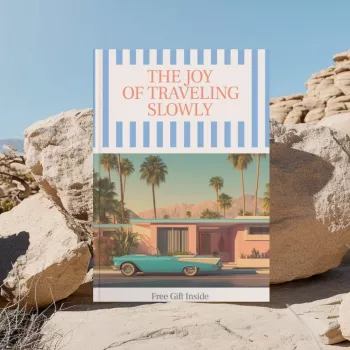
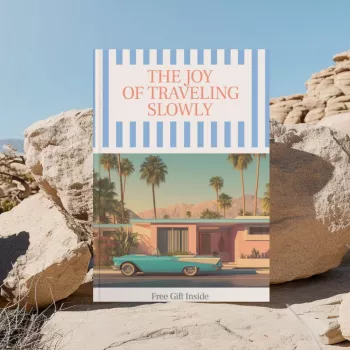
If you want to keep exploring this approach, our The Joy of Traveling Slowly guide is an option for beginners interested in more intentional trips. Before you go, practical preparation can help you leave with fewer loose ends. If pet-proofing your home is on your pre-trip list, our Everyday Pet Safety Kit for a Fully Pet-Proof Home is a separate resource to consider.
Most of all, make the pace fit your life. You can love a popular attraction, enjoy a busy morning, and still leave the afternoon open. A trip need not be measured by how much ground you covered. It can be measured by how fully you experienced the places you chose.
FAQ
Can you practice slow travel on a short trip?
Yes. Choose fewer stops, stay in one area, and leave some time open, even if you are away for only a weekend.
Does slow travel mean avoiding popular attractions?
No. Visit the places that matter to you, but allow enough time to enjoy them without treating every sight as a box to check.
How do you begin planning a slow-travel itinerary?
Pick a home base and one or two priorities, confirm essential logistics, then leave room between planned activities.















Leave a comment